
Outside of London, the biggest city for football in England would be Manchester. Manchester is the home to two of England’s top club. It is the home of Manchester United, the historically most successful club, and Manchester City, the most successful in recent times. Football is one of the things that defines the city of Manchester.
One place Manchester is home to is the National Football Museum. It is a place where any football fan can come in and see various items from years past in English football history for both the men’s and women’s side of it.
As its significance to the football fan culture of England has not been stated in previous research, its importance was explored as I walked through the museum.
Each fan can get their picture with replica versions of the Premier League trophy and the FA Cup right after they walk in if they choose to, before going upstairs to the beginning of the exhibits.
The first thing that appears when someone walks into the first part of the exhibit is a wall with a statement shown below.

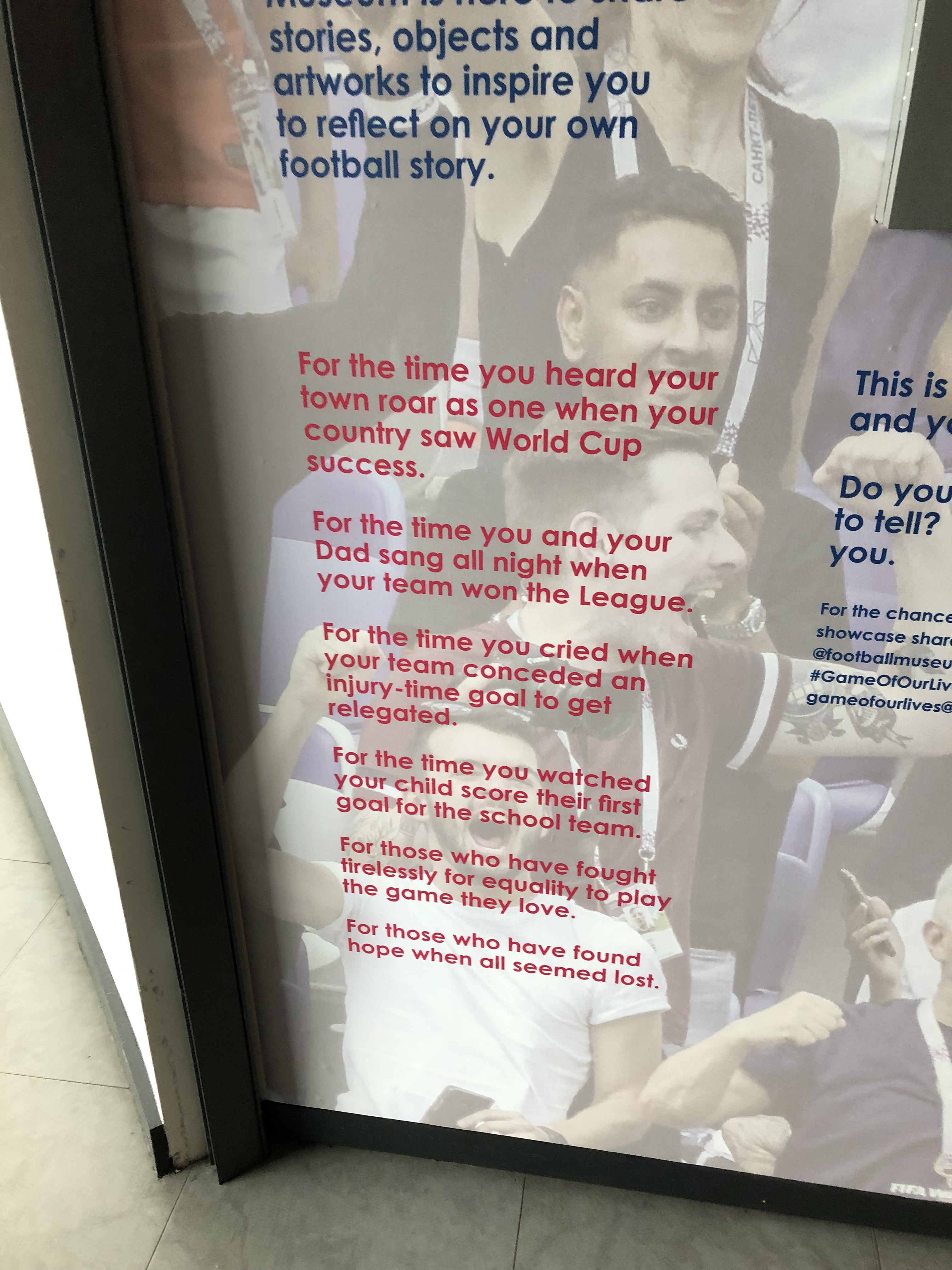
In the statement on the wall, it is implied that football is for everyone and it brings people together. However, each person has their own football story that is unique to their lives. At the end of the day, every football fan has the same experiences as other fans, while having their own. The museum is a place where people can learn about the history of what has gone on in England with football in past years. However, the museum is tailored so that everyone can connect with various objects and stories that are shown there.
For an American, there is so much to learn at the National Football Museum as football is not a huge part of the American sports culture. It can be seen as a long history lesson for football fans in America. It can also be a time to reflect on how it connects to American sports culture. Thus, this adventure is through the perspective of an American that may not have as much of a background on football history as Englishmen.
As people can learn at the museum, there are various topics within football presented within the museum.
Like all sports, football has its own competition and trophies. What makes it unique is that it has multiple trophies to play for.
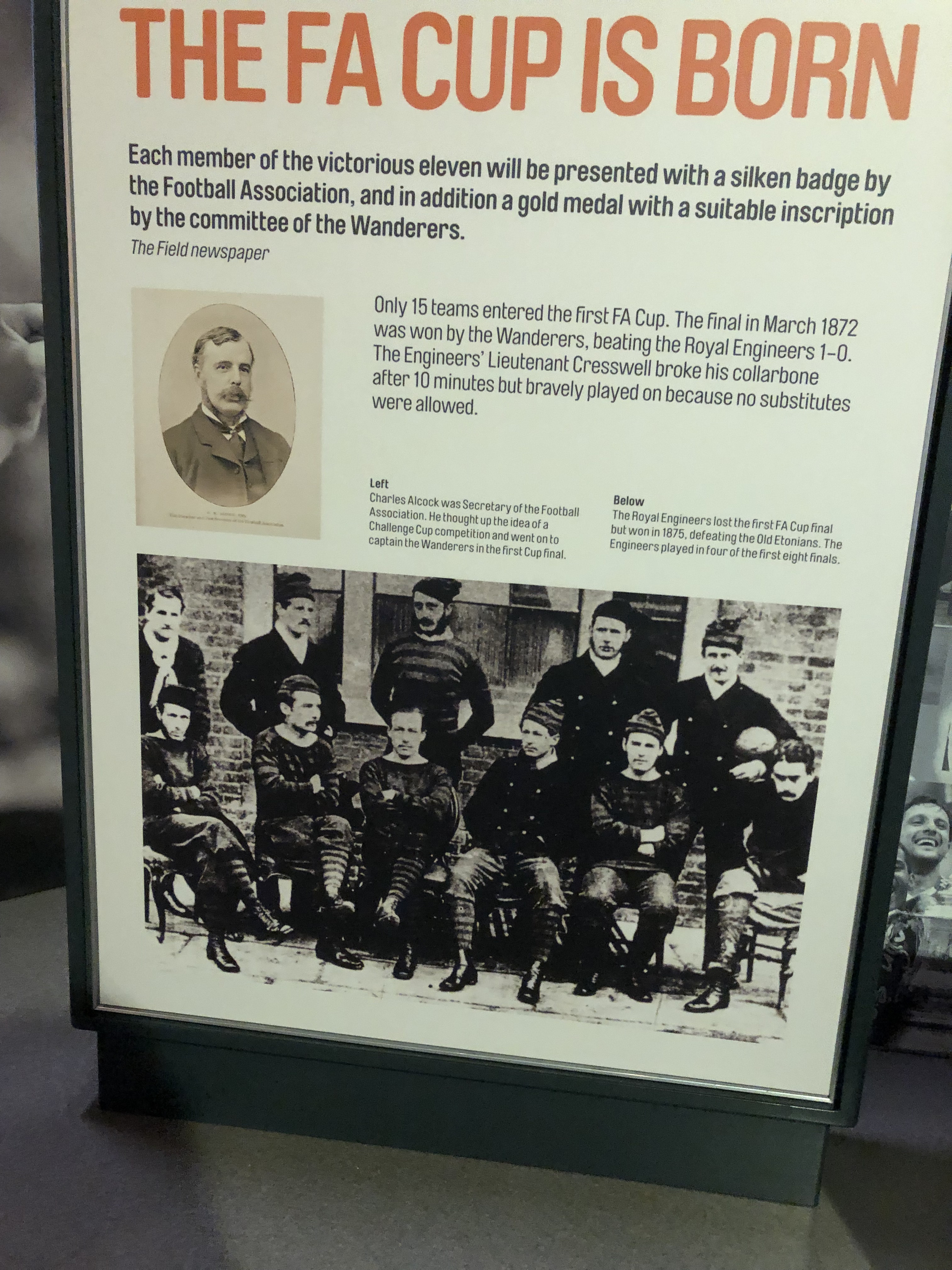
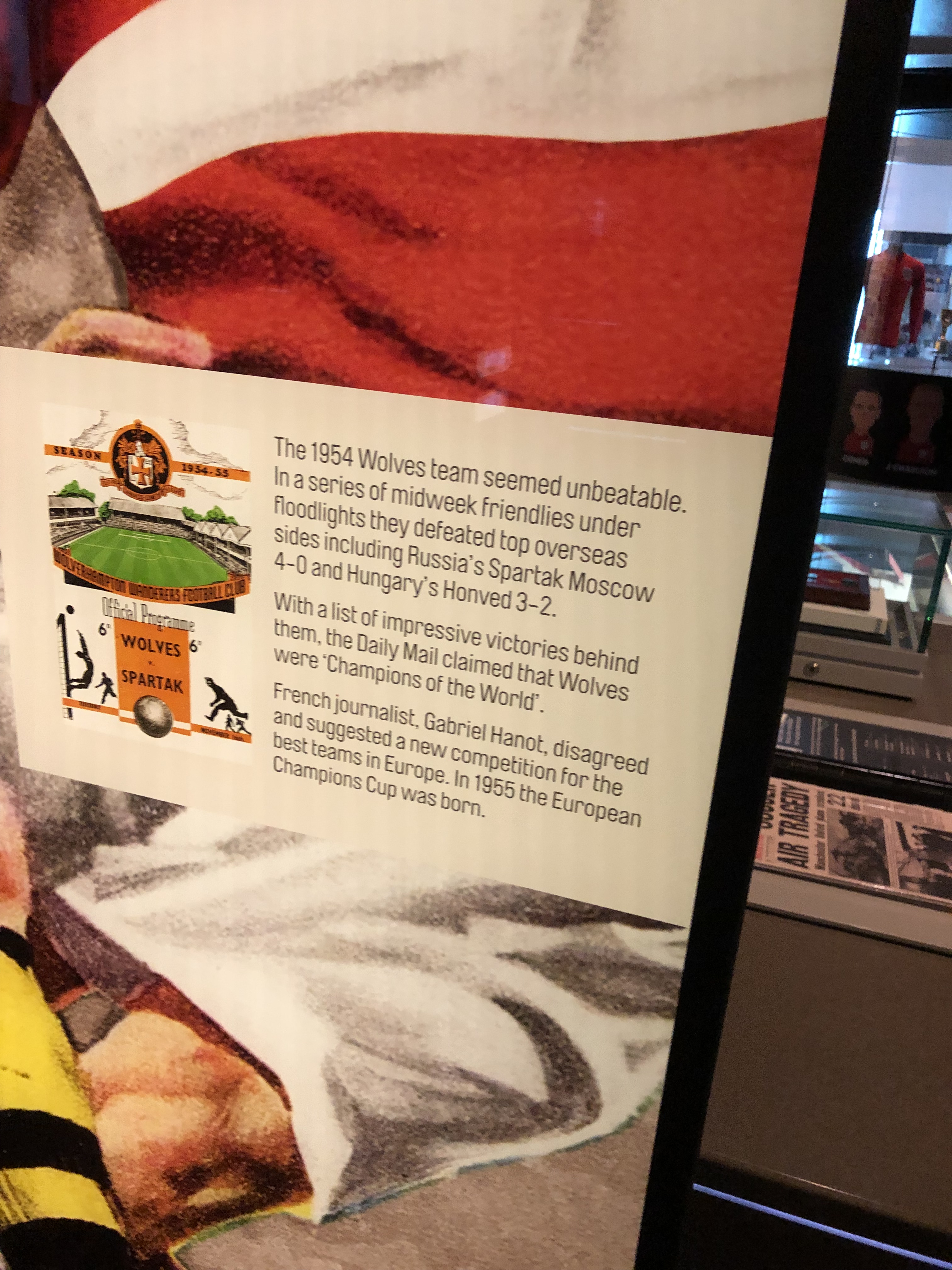
In football, there are so many competitions to play for. At the football museum, supporters can learn about the FA Cup, one of the large honors of England. What is also talked about is the Champions League, the honor among the most prestigious teams in Europe. Depending on each fan’s interest, they can take the time to learn about each of the trophies played for and why they have significance. For example, the Champions League represents dominance in not only domestic competition, but also foreign competition.
Aside from competitions, people can learn about the significance of various players in English football history and what they mean to each team. Tailored to my own experience, I decided to look into the players that had an impact on Manchester City.
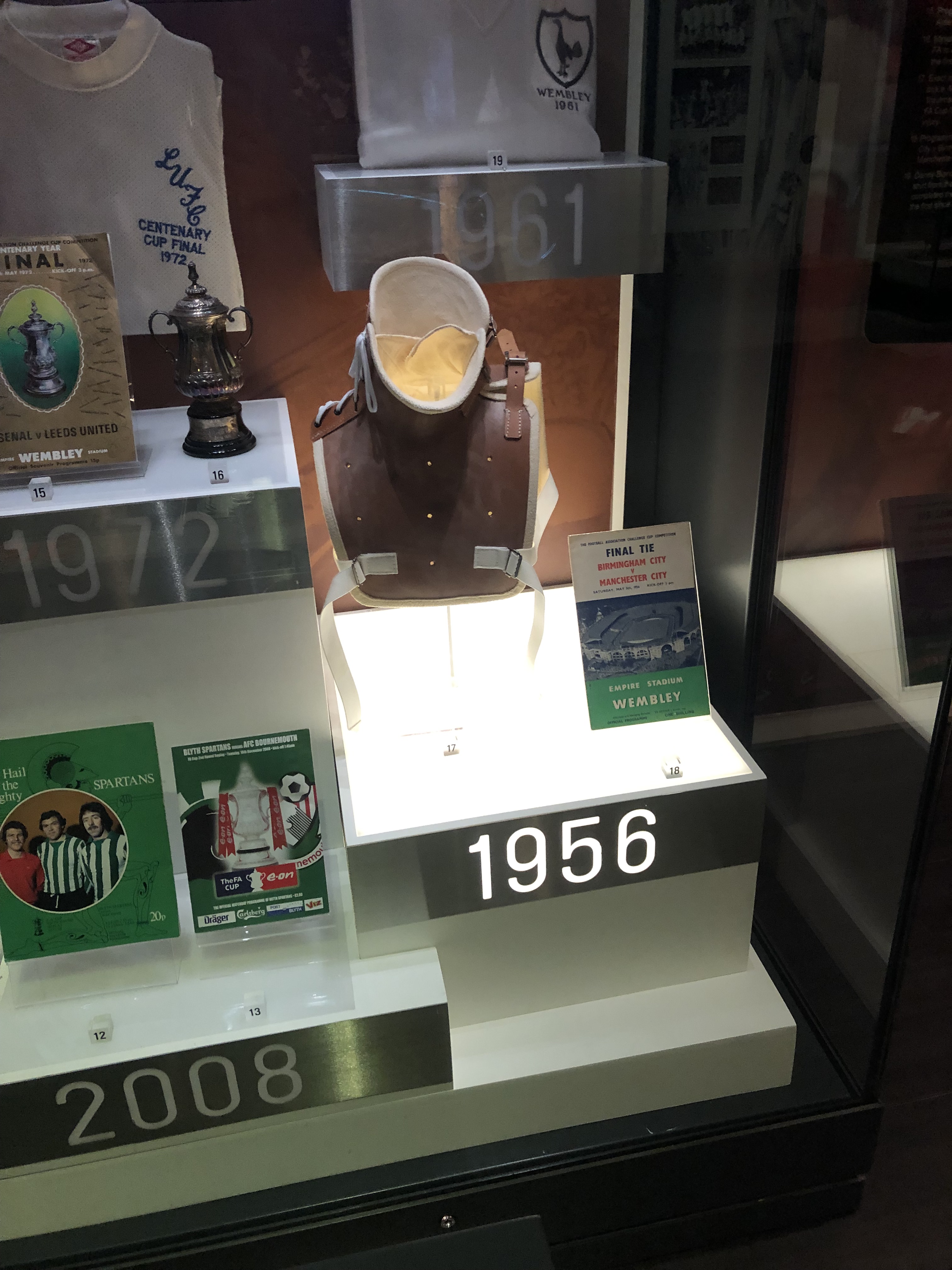
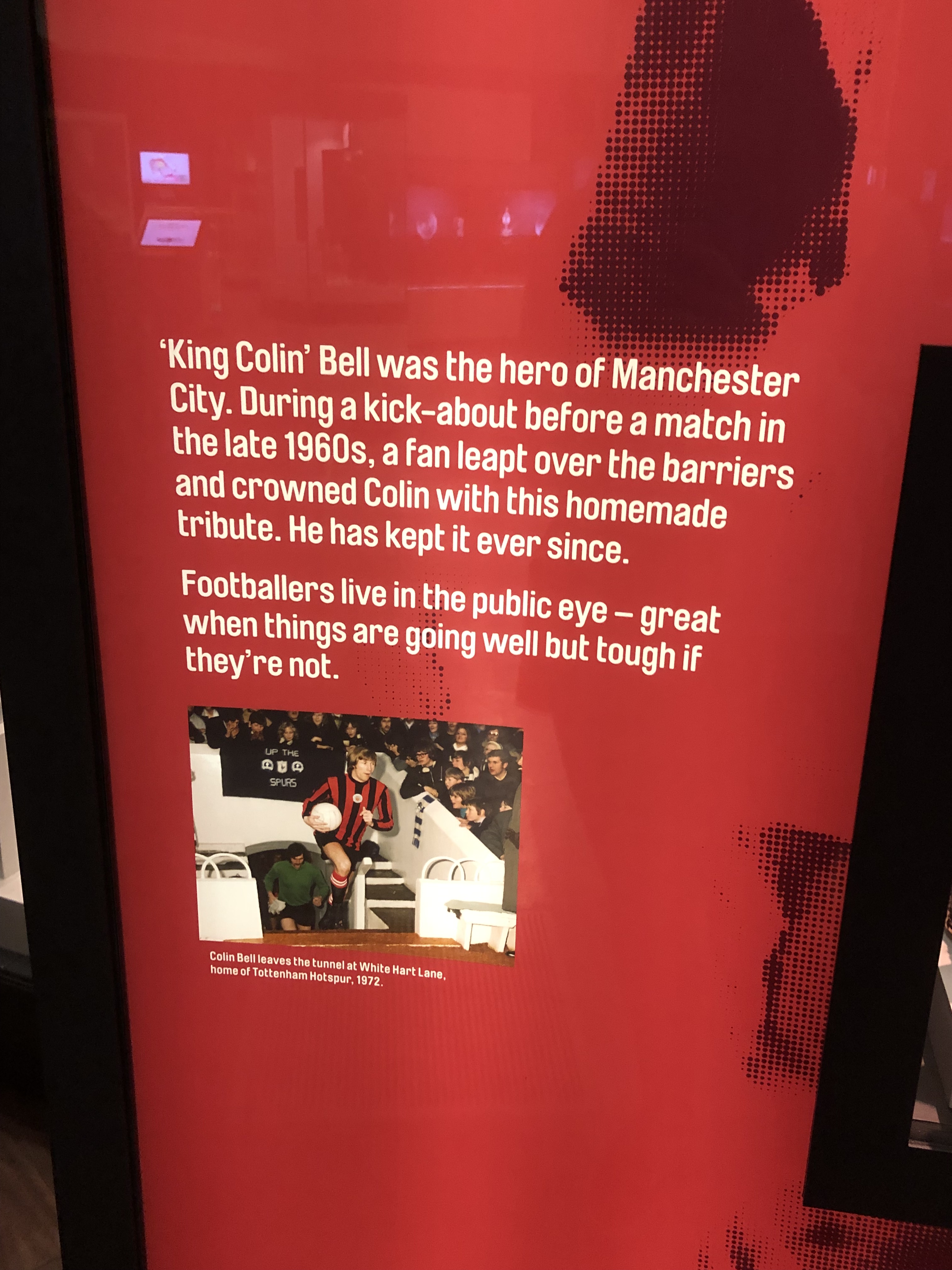
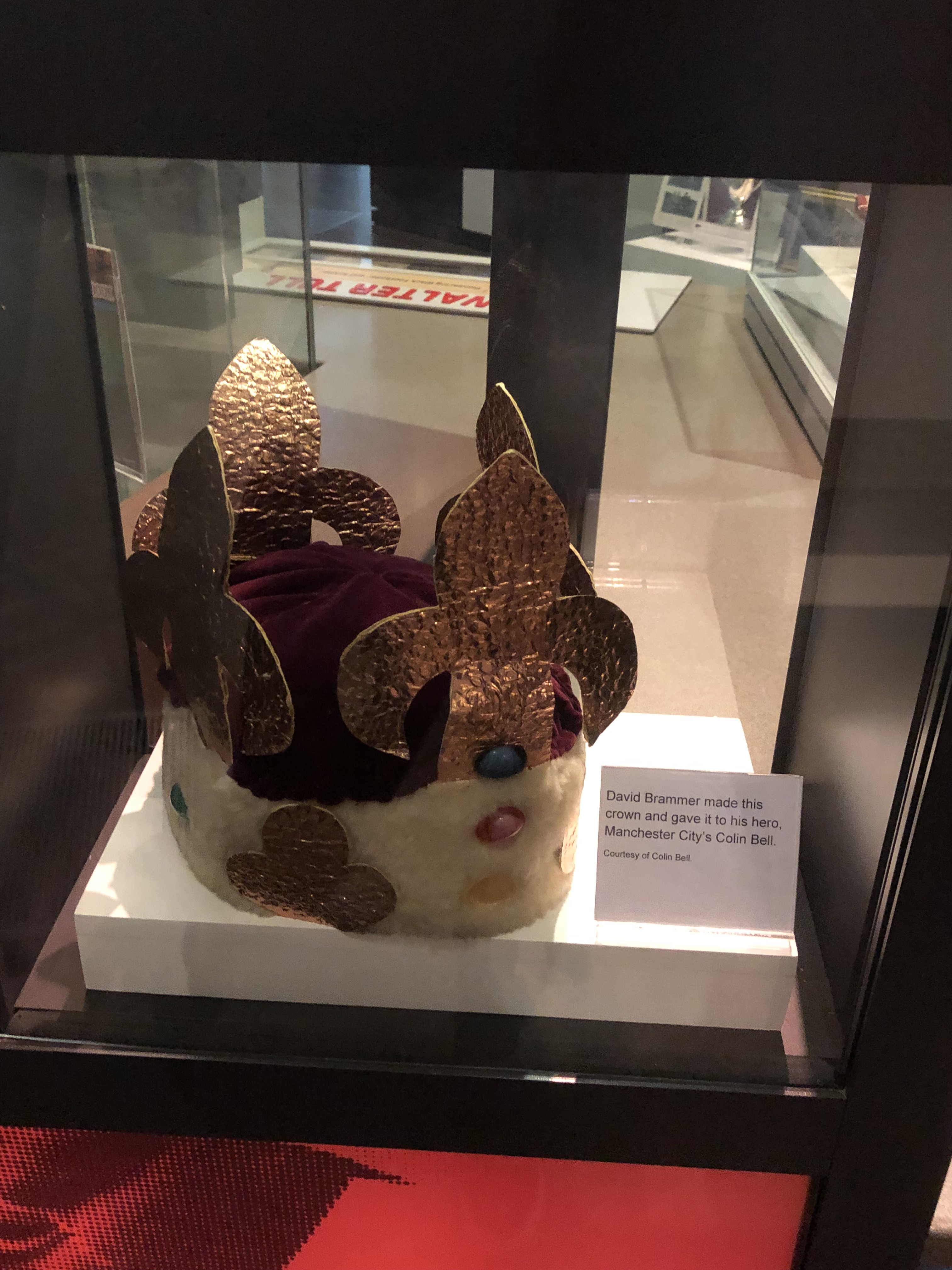
Walking through and reading about what players had done for their clubs in the past makes people understand why a player may be hailed as a club legend. When learning about Bert Trautmann’s decision to continue playing with a broken neck during the 1956 FA Cup final shows the perseverance that people admire. Fans that lived for that game will always admire that.
Continuing to learn about players, fans can also go through and explore issues that revolve players that may be unique in certain aspects.
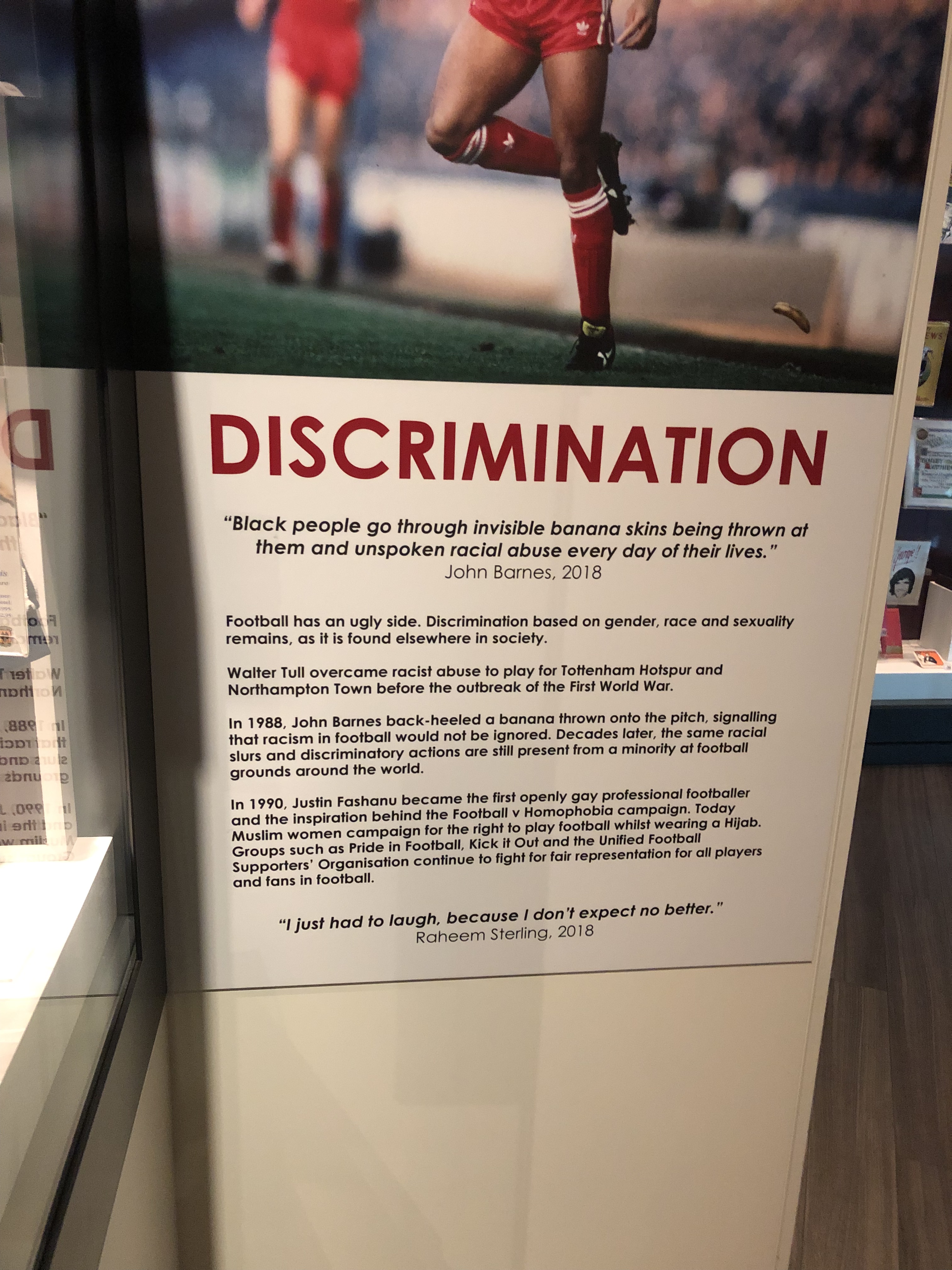
As racism is still an issue in all sports, not just football, it is a good idea to learn about how much race issues can have an effect on the culture. In England, many players of color deal with race issues still today, and even if they are fantastic players, they may not be loved because of their color. The section of race can allow people to understand more about these issues. It can help understand that the game is for everyone.
The museum shows that the game is for people of all races and genders as well. Thus, the inclusion of a section for women’s football as well.
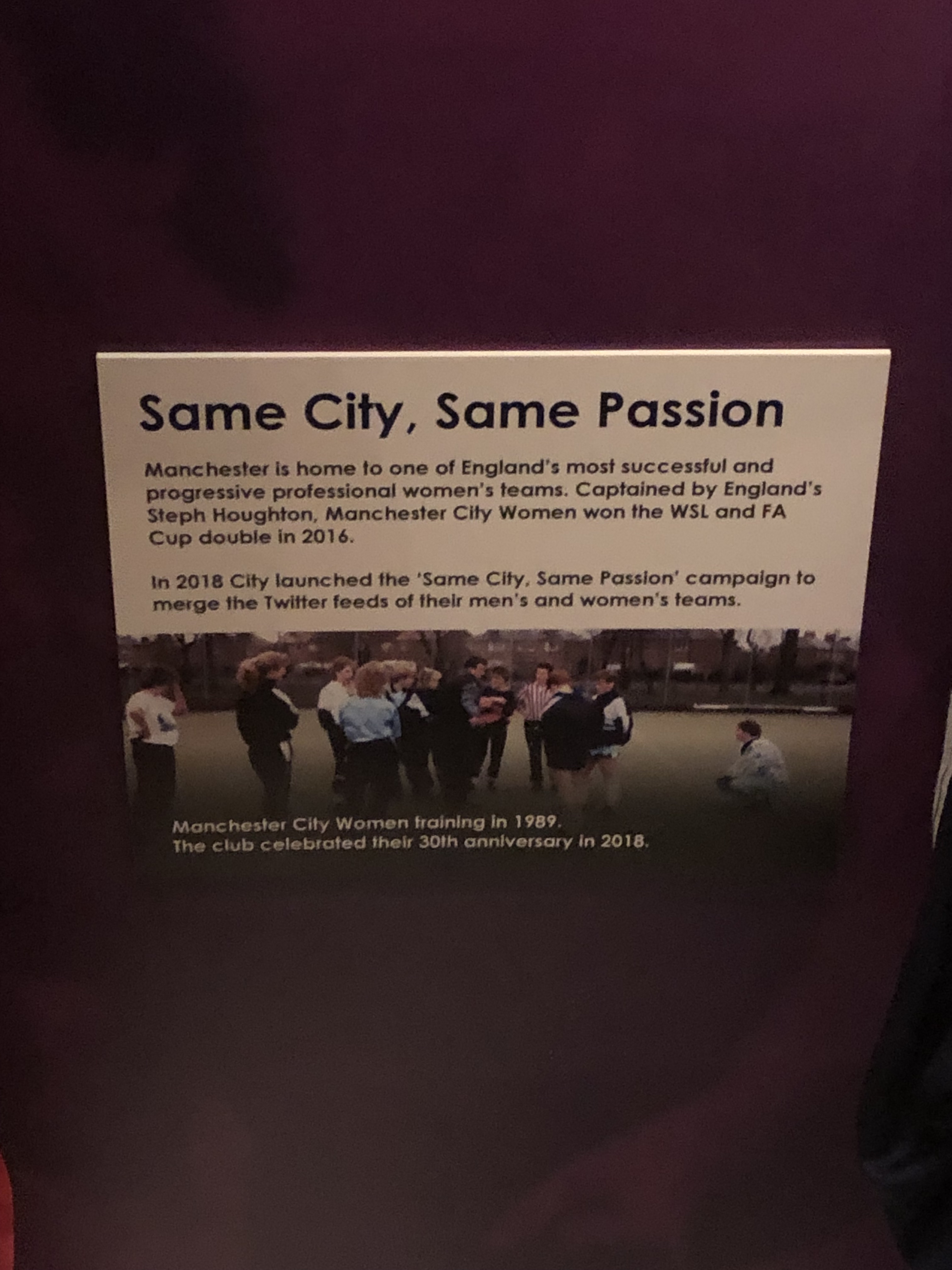


Fans learn that women’s football was once banned in England, but it recently has emerged as a growing sport in the world. As the England ladies are one of the women’s football powerhouses in the world, it may start to become more and more important to be more informed about the women’s side of the sport. Many women do love the sport, and the ability to play only opened up many more opportunities. The women’s section of the football museum allows fans to see why this part of the sport may have a large impact on England one day. It helps empower women. As a female athlete myself, this part of the museum was something that I admired a lot.
Ultimately, the museum ties up all of the exhibits together into one theme: football is a place where people can feel like they belong.

One of the only things that previous research stated about football fan culture is that it brings all people together no matter what class they are in and where they come from. The National Football Museum is the one place that reiterates the sense of belonging in football fan culture, and fans can carry that idea on after visiting.
 The Beautiful Game's American Fanatic